Showing posts with label Financing. Show all posts

Saturday, August 11, 2007

US Sub Prime Crisis Scenario In The Philippines


The US is now facing a sub prime mortgage crisis which threatens borrowers with foreclosures. People who borrows from sub prime lenders are those who can not get loans the traditional way from banks due to their poor credit history. Sub prime lenders charge higher interest rates because their borrowers are deemed as high risk. This has become big business in the US and UK in the past few years with lenders giving out loans left and right. Until reality hits that interest rates are rising while house prices are falling leaving people unable to refinance as quickly. The effects of this are now being felt in the stock markets worldwide due to fears that this problem will spread beyond sub prime lenders with American Home Mortgage, the 10th largest lender in the US as the first big casualty in what others fear is just the preview of things to come.

Can such a scenario happen here in our country? Sub prime lenders here in the country are usually what we call five sixters and are usually small firms or private individuals.They will charge interest rates that will cost you an arm and a leg. But those rates are justified due to the inherent risk of lending to people with poor credit history or those who has no documents showing proof of income. The closest thing to the sub prime crisis that the Philippines has encountered was during the 1997 Asian financial crisis where many businesses and lives have been ruined due to the extreme devaluation of the peso high interest rates which was suddenly saddled to people who had their homes or business mortgaged lead to a record numbers of properties being repossed. By the time the crisis has passed, banks has imposed stricter regulations in acquiring loans. Prime lenders such as banks are now very strict when it comes to handing out home loans these days although current low interest rates makes it very attractive to get a loan.

Thursday, June 28, 2007

Lending to your Friends and Relatives


There are few things harder in life than having to look your best friend or relative in the eye as they ask you to lend them some money. Countless relationships have been ruined by the borrowing of money. You risk your friendship by saying no when they ask you for money, but you will also be taking a big risk by saying yes. And in most cases, people who lend money to a friend are liable to loose them both. But its really hard to say no to your brother or sister when they approach you for a loan that they may desperately need. The first consideration you have to take is how much they are going to borrow and can you afford the amount they are asking. As a general rule, if you cant afford to give the money away, you cant afford to lend it. Take into account whats the money for? If they are asking you to lend them money to buy a new car, a plasma TV and things that they can live without, or as we Pinoys call it "luho" then flat out decline. But if it's for hospitalization of a family member or tuition fee for a son or daughter to finish their schooling, then consider lending to them if you can afford it. The next step to take if you decide to lend them money is to get it in writing for your protection and schedule a repayment scheme to make payments easier. Another issue when lending to friends or family is the interest. Should you charge interest? It depends but if they are already hard-up to begin with, charging them interest will only add to their burden.

But what if you really want to help them out but you don't have the funds to do so. One way is helping them get a loan from the bank by being their guarantor. Being their guarantor will give their loan application a greater chance of being approved. But be careful, being a guarantor means that if they default on their payments and could no longer pay the bank back even after all their properties are sold, the bank will go after you and your properties until payment is satisfied. This is a difficult decision to make, but the most important thing to consider before any decision is made is your own family. How would they feel about this? Discuss this with your spouses before making any rash decision, it may cause a rift in your relationship and no matter how good a friend or how close a relative, you should consider the welfare of your own family above all others.

Sunday, April 15, 2007

Decompositional Analytics|Measuring Stick for Risk


In lending, as with most investment opportunities, presents itself with various degrees of risk. How much of a risk you are willing to take depends on you. Forecasting the factors that contribute to the risk in your lending business is essential if you want to anticipate and minimize the impact of such problems. Decompositional analytics is one such tool as it splits forecasting performance into individual parts, and takes into account the effect of seasonality and vintage maturation as well as volatile environmental factors on your business portfolio. Factors may be multiple possible macro economic scenarios, competitors' actions and offerings, and management actions. Some leading lenders are now using such methods to forecast loss more accurately and to better understand and manage investment portfolio performance. Using decompositional analytics, it is possible to isolate the impact of each performance driver and to create a more accurate economic response model. Traditional forecasting approaches rely largely on historical data and do not accurately measure the many volatile factors that can influence investment portfolio performance. Consequently, traditional forecasts may fall short or fail to reveal which factors impacted performance.

The ability to isolate and measure the various components of performance enables the early optimization of marketing campaigns.
If you could minimize the time required to confidently estimate business campaign profitability or reduce the error rate of loan loss forecasts to one percent. In an increasingly competitive consumer lending environment, predicting your investment performance has never been more critical. Lenders can evaluate, for example, if loan rates are robust enough to withstand a modest slowing in the economy. If not, they can adjust penalty fees and other loan terms to reduce pricing fragility. Also, taking into account seasonality, it maybe difficult for your clients to pay you back in the months of the holiday season since there is an increase in spending so planning ahead to anticipate this will give you an edge.

Wednesday, April 11, 2007

Philippine Islamic Mortgages | Shariah


Shariah is the term used to describe Islamic law. Riba ( interest ) - the abolition of interest, is a religious goal and value that the Islamic economic system is based on. Historically, the issue of Riba combined with limited availability of Halal mortgage options has prevented numerous Muslims from purchasing homes without compromising their beliefs. Conventional mortgage loans are interest-bearing, in conflict with Islamic Principles, and therefore Haram (prohibited) by Shariah. This has presented difficulties for the finance industry and created barriers to homeownership for our Philippine Muslims brothers. Filipino Muslims can purchase homes or refinance existing mortgages using faith-based options. Halal mortgages are structured differently than conventional interest bearing mortgages, so they are Shariah compliant and are inline with Islamic principles.

The two most common forms of Shariah compliant home purchase finance are Ijara and Musharaka. According to practitioners of Islamic banking and scholars, these methods are the most suitable means for purchasing property in the Philippines via The Al-Amanah Islamic Investment Bank, currently the only Islamic Bank in the Philippines. Both Ijara and Musharaka are long established Islamic financing principles.

Ijara is based on a “lease-to-own” concept and is interest-free making it compliant with the Riba provision of Shariah. In an Ijara based transaction, you identify the property you wish to buy and agree to the purchase price with the seller. The bank enters into a “Promise to Purchase” agreement with you for an amount equal to the original purchase price and purchases the property. At the same time, you enter into a lease agreement with the bank which details your rights to occupy the property. You make monthly payments to the bank and a portion of the payment is applied toward the purchase of the property with the remainder paid to the bank as rent. Once the purchase price is paid in full, rental payments cease and ownership of the property is transferred to you.

Musharaka is based on a “shared ownership” concept. In a Musharaka based mortgage transaction, you identify the property you wish to buy and agree to a purchase price with the seller. The bank buys the property and leases it to you (similiar to Ijara). Your first payment is your initial contribution (deposit), in a Musharaka arrangement this amount will become your initial `Share` of the property. As the mortgage term progresses, the capital portion of your monthly repayment to the bank will add to your percentage share of the property. When you make your last payment at the end of the mortgage term, you would have purchased 100% share of your home.

Using the Islamic Finance concepts of Ijara or Musharaka, you now have a choice of faith-based mortgage options enabling you to purchase a home or refinance a conventional mortgage through a Halal mortgage which is Riba free and; therefore, Shariah compliant

Friday, April 06, 2007

Philippine Islamic Mortgages


It is against Islamic law to pay or receive interest, This creates a problem for our Muslim brothers when it comes to getting a loan or a mortgage. Fortunately however many banks and building societies are starting to recognize this as a problem and are offering an alternative. In the Philippines, the Al-Amanah Islamic Investment Bank of The Philippines, the first and only Islamic Bank operating in the country is offering such a service for our Muslim brothers.

There are two options available to you that correspond with Muslim law:

• The Murabaha (Deferred sale finance) Mortgage
• The Ijara (lease to own) Mortgage


The Murabaha Mortgage:

This is only really an option for individuals/families who have a fair amount of capital behind them, because it is a condition of this Mortgage package that you are expected to pay (circa.) 20% of your home’s value, on the day of purchase. However from that day the house will be registered as your own. You may pay off any debt that is outstanding on your home at any point. This package offers a fixed repayment period that is agreed between you and your lender, any a monthly repayment amount that is fixed for the term of your mortgage.

So how does the Murabaha Mortgage work?; When you find the house that you wish to buy, you arrange a sale price with the vendor as normal, however the bank pays the purchase price, then immediately sells the house to you at a higher price (the higher price is determined by the original price of the property, and the repayment period that you will have agreed with the lender), minus the percentage you pay as deposit.

The Ijara Mortgage:

This is a slightly more popular choice of mortgage, as you do not need a large amount of capital behind you to set up this mortgage, it is also slightly more flexible than its counterpart. An extra benefit to this type of mortgage is that it can even be taken out to replace an existing interest mortgage. The amount you pay each month is usually fixed yearly. The outstanding balance can be paid off at any time (usually) without incurring any penalties.

So how does the Ijara Mortgage work?; As with the Murabaha mortgage, you find a property that you wish to buy, and agree a purchase price with the vendor, the difference is that; your lender will then purchase, and gain ownership of the property. You will enter into a lease agreement with the lender. Each month you will be expected to pay rent to your lender and a contribution towards the purchase of your property.

Tuesday, April 03, 2007

Philippine Student Loans


When Filipinos think of student loans. Its usually a grant from the government or some private association in which the student repays them after graduating or becomes a full scholarship if the student can maintain his grades at a certain level. But if you think about it, there is no commercial product that is available from banks that particularly caters to students. There are personal loans and multipurpose loans out there that can be treated also as a student loan because those type of loans can be used for any purpose of the borrower. But as a separate product, there is no student loan being offered in mainstream banks that can readily be accessed by the typical Filipino family. And how can a student apply for a personal loan if they cannot provide a proof of income or an Income Tax Return? These documents are necessary when applying for a loan if you ever want to be approved by the bank. Even if you are a working student, most banks will not approve the loan of part timers.

Government should cooperate with banks to provide ready to access student loans with lower interest rates that can be subsidized by the government as well as flexible terms and easy approval for families of OFWs, especially since tuition fees are skyrocketing through the roof. If you think how much our tuition fees when we are studying (for the 30 something crowd out there) compared to today. Parents are hard press to find money to pay for their children's schooling and government must provide a commercial alternative to scholarships and grants because not ever student can maintain a high grade point average or become a valedictorian. I mean how many valedictorians are there in a batch? 1000? 100? There is only one in contrast to how many students also need funding. I don't believe in dole outs by the government and by providing a ready commercial student loan product with a significantly lower interest rather than the alternative to getting a loan from loan sharks which charge as high as 20% a month. Poor families with loan shark debts will sink deeper into poverty because interest rates do add up but they will still bite just to provide money for tuition fees for their children who they will pin all their hopes and dreams but after graduating will join millions more out there looking for a job.

Wednesday, March 28, 2007

Paying Back Debt Honorable Thing To Do


Paying back your debts is the honorable thing to do. Whether you owe your friends, relative or loans from banks or financial institutions. Its is always important to settle you obligations to keep your good name in tact so you can borrow again when the need arises. Banks and credit card companies keep a record of people who default on their payments, people who are included on the list will find it very difficult to obtain any type of loan whether its an equity loan, personal loan, home loan or a car loan. Filipinos value close family ties and friendship, so If you obtain your loans from friends or family members and you end up not paying them, your relationship be strained and they would probably would not want to see you again. That would be devastating for both parties.

But what if you are already up to your necks in debt? Is this a good excuse not to longer pay your obligations? I am a firm believer that one must settle his or her obligation and no matter how bleak the prospect of you actually settling the debt, you must try because its the right thing to do. The proper way of settling a debt is to talk to the concerned parties. Tell them that you no longer have the capacity to pay back your loans but you are willing to cooperate with them to work out some kind of a deal, and ask them to stop charging you interest if any so what you owe them does not balloon up. The best way is to pay them back a fixed amount every month, no matter how small the amount maybe. Every payment is a step closer to settling your debt. Most will welcome this proposal and will gladly accept your offer.

The best way to avoid being in debt is not to incur debt in the first place. Do not buy non essential things and know your financial capabilities before getting a loan to buy that hot new car just because you neighbors are buying a car or mortgaging you house because of a gambling habit. You might just wake up one day and your car or worse, your home is being repossess by the bank and you end up staring at financial ruin.

Monday, March 26, 2007

Cycle of Debt


With the ever increasing prices due to the higher cost of living, most Filipinos find that their take home pay is never enough to cover most of their expense and usually resort to getting a loan. But what if your loan turns to an endless cycles of lending and borrowing.
Filipinos who survive on cash advance, salary loans, educational loans, SSS or GSIS loans, car loans, housing loans plus other types of loans are plagued with multiple and endless debts that they do not even realize these loans are keeping them prisoners in this vicious cycle. Remember that living on loans is living beyond one's means and is gambling with your family's future. When borrowing money is the only solution to inadequate salary, We are throwing away our freedom to move, to decide, to enjoy our earnings because we already spend our money even before it reaches your hands. And if this loan is still not enough, we end up getting another loan just to pay off our existing loan. A scary way to live but this is really happening around us.

But most of the time it is ignorance of how to take care of one's finances that is the main reason why one is in debt. Its the lifestyle we chose to live that affects where we spend our money, if we live beyond our means we incur debt. A person who earns six figures a month is in the same boat as a person who earns minimum wage if one does not know how to take care of their finances. I observe that the higher ones salary, the more in debt the person usually is. I know a bank manager who earns quite a lot but has piles of debts. She has already exhausted her personal and equity loan from the company she works. Maxed out on her credit cards, has an existing car loan and her home is mortgaged. She even has resorted to borrowing from her staff, and now the credit card company is calling her daily due to non payment of bills and has began avoiding them. Interest rates from loans do add up, and if it piles up, it will be way over her head and one day she might wake up to the reality that her car and home is being reposes by the bank due to the massive loan she was unable to repay.

Good management of ones finances will really help avoid debt. And if you are already in debt, all is not lost. You can contact the finance agency or bank that you have a loan to tell that you can no longer pay them and work some kind of a deal. If you have debts due to a car loan, its best just to let them reposes the car or sell it to someone who would continue to pay the loan. Cars depreciate in value as soon as you roll them off the showroom, so there is no sense in hanging on to them. Treat it like you have rented the car so it would not hurt as much. For credit card debts, balance transfer it to a company that offers a lower interest with fixed term to pay it off. Just remember that an ounce of prevention is worth a pound of cure so its really better to avoid getting in debt in the first place.

Saturday, March 24, 2007

Philippine Microfinance Loan


Microfinance Loan as the name implies, refers to lending small amounts to those whose incomes fall short of the minimum required by more traditional commercial and savings banks. Typical borrowers of the loan are small variety store owners, buy and sell businessman and road or market side eatery owners. The loans are much smaller than those offered by bigger banks. Loaning small amounts of money to entrepreneurs allows banks and financial loan institutions to do earn a decent profit and help fellow Filipinos have a better life. By helping small Filipino entrepreneurs, microfinance proves to be a potent tool for social development ability and to alleviate poverty in a financially sustainable manner.

The interest rates on microfinance loans are slightly higher than that of commercial banks because these types of loans are usually character loans, meaning there is no collateral required but rely more on cash flow of the individual applying for the loan. The interest rate is typically pegged at about 2 to 3 percent a month, less than the average rate of 3.5 percent a month charged by credit card companies, and much lower than the 20 percent a week charged by the loan sharks or five six loans.

One of the biggest lenders in microfinance in the Philippines is Planters Bank. But more banks are getting into the act due to the demand for the loans and profit in the business but they have to take extra effort in educating borrowers, many of whom are borrowing money from a bank for the first time. Most of banks that offer microfinancing are rural banks not the mainstream ones. Microfinance is a very expensive venture for most banks because a lot of expense goes into servicing and collections because the borrowers typically do not have the time or the energy to go to the banks to pay their loans. But repayment figure was at the high 90 percentile level, with bad loans at a minimum because microfinance institutions go the extra mile to collect from the borrowers, weekly if they have to.

Thursday, March 15, 2007

Philippine Sub Prime Lending


Most Pinoys have never heared of sub prime lending, but you might be more familiar with the term five-six? They are basically the same. Sub prime lending simply means loaning to people who have poor credit histories or cannot prove their incomes due to lack on an Income tax Return (ITR) that makes it virtually impossible for their loan to be approved by a bank or mainstream financial institution.

In the United States and in the United Kingdom, the simplest form of sub prime lending involves doorstep lending, small amounts of cash loaned to people usually on low incomes and then collected from their own home and the sub prime mortgages where people borrow against the increased value of their homes, often to pay off other borrowings.

In the Philippines, major commercial banks and mainstream financial institutions do not lend to people who have a negative credit history usually found in the CMAP, cannot prove their capacity to pay due to lack of proper documents from non declaration of their income taxes. However, there are those who lend to these type of borrowers, usually charging a premium rate of interest due to the risk involved.
These lenders are usually associated with the police and military or knows a lot of politicians, lawyers and judges due to the risk of default payments from their borrowers. These individuals are usually intimidating or use a variety of intimidation tactics making the borrowers afraid in not settling their obligations.

The risk of lending to people with poor credit history is evident by the reaction of the US Stock Market when New Century Financial, a major sub prime lender in the US has had its shares suspended on the New York Stock Exchange amid fears that the firm may be heading for bankruptcy due to a rise in default rates in the sub prime sector and a slowdown in the US housing market coupled with rising US interest rates have also hit the company. These effects are being felt even halfway across the globe in our own Philippine Stock Exchange where most of this years gains were wiped out.

Saturday, March 03, 2007

Loan and Franchise Financing by Makati Finance


Great new for Those who want to franchise but does not the means to start a business yet. Get a franchise business financed by Makati Finance so you can easily start your dream business via loan and don't have to seek greener pasture in other countries.

Makati Finance selected a number of Franchise Businesses which do not require a big capital, easy to manage and are available for Metro Manila and neighboring provinces. For details call our hotline at (02) 995-0734 or 912-2973.

Target Market:

  • Doctors, Dentists, Veterinarians
  • Managers and Executives of Private Companies
  • Self Employed Individuals

Qualified Borrowers:

1. Filipino Citizens
2. In practice, business or regularly employed for at least 3 years
3. Must have telephone landline at place of residence or work
4. Preferably with experience in business

Manner of payment:

Through post dated checks (PDC) via monthly or semi-monthly payments

Turn-around Time:

3 to 7 working days

Documentary Requirements:

1. Application and approval of the Franchise
2. Application to Makati Finance
Depending on the type of profession and amount of loan

Release of Loan proceeds:

Loan will be paid out directly to Franchisor

Steps to a financed franchise:

1) Fill up the form below(can be found on their website http://www.franservice.biz)to request for the Franchise Kit of the selected Company

2) You will receive the Franchise Kit of your choice.

3) Submit Letter of Intent and Confidential Questionnaire, which is part of the Franchise Kit

4) Your Franchise application is evaluated

5) You receive Sample of Franchise Agreement

6) Ask all necessary questions to Franchisor

7) If you are approved as Franchisee and you agree to the terms of the Franchise, then apply for the Financing with MFC (Makati Finance)

8) If your loan is approved, find a good location

9) Inspection of your location(s) by Franchisor

10) If location is approved, sign Franchise Agreement and loan papers

11) Set up of the Outlet

12) Undergo Training

13) Receive Pre – Opening Assistance

14) Grand Opening! You’re in business with your own Franchised Outlet!

Please visit their website for more details: http://www.franservice.biz/

Thursday, February 15, 2007

Philippine Domestic Letters Of Credit or Trust Reciept Line


Domestic Letters Of Credit or Trust Reciept Line are Credit instruments issued by Banks guaranteeing payments to a Beneficiary to finance purchase of raw materials by the Bank’s Customer. In effect it is a loan granted by the bank as a promise
to pay the exporter to that of the foreign buyer provided that the exporter has complied with all the terms and conditions of the letter of credit. Payment under a documentary letter of credit is based on documents, not on the terms of sale or the physical condition of the goods.

This credit line is designed to provide for working capital requirements easily with access to funds via Promissory Note when needed. Use your credit to cover cashflow requirements to finance receivables, inventories, seasonal operating needs or to meet business expansion needs.

Most if not all banks follow these guidelines when lending to their prospective clients:

  • Product Features Line Amount Minimum of PhP 1.0 million
  • Line Expiry One year from date of approval
  • Interest Rate Based on the prevailing lending rate of the Bank at the time of availment.
  • Interest Repricing Monthly
  • Repayment Principal payable at maturity of TR; interest payable monthly in arrears
  • Collateral TR on goods to be financed. All other collaterals acceptable to the Bank.

Documents needed when applying for the loan credit line:

  • Audited and In-House financial statements and must be profitable for the last two years
  • BIR stamped Income tax return for the last two years
  • Bank statements for the last three months
  • Certificate of Business Registration with Department of Trade and Industry or Securities and exchange Commision
  • Articles of Incorporation and By-Laws

Documents that are needed by the bank for your collateral:

  • Copy of Transfer Certificate of Title (TCT) or Condominium Certificate of Title (CCT)
  • Lot Plan with Vicinity Map
  • Tax Declaration of land and or improvements


  • Back To Home Page
  • Wednesday, January 31, 2007

    Intense competition brings down credit card and loan interest rates


    Intense competition between credit card issuers and loan agencies have brought down interest rates on credit card loans but regulators said they are not satisfied with promotional loan and credit card rates and wanted to see longer-lasting results and adjustments. The Bangko Sentral ng Pilipinas (BSP) said it is closing in on a consensus with credit card and loan companies on how to bring down the cost of credit card loans and put rates in line with declining benchmark rates.

    The BSP said that credit card rates have declined somewhat but the drop was largely related to promotional offers that issuers use to entice credit card subscribers and people to avail low rate loans. There is a lot of promotional campaigns going on that effectively brought down the rates, basically, they’re poaching each other’s customers."

    As a result, some credit cards offer rates as low as 0.75 percent a month which would bring the annual interest rates to nine percent, down from the average of 35 to 40 percent and cash loan rates from the usual 2.5% to 1.25% to 0.99% and lower depending on the loan term. Credit card issuers have brought their monthly interest rate on credit card loans to 2.25 to three percent per month, down from the usual three to four percent per month of loan.

    The BSP is still talking to the Credit Card Association of the Philippines (CCAP) to determine whether there is a room for bringing the rates down further and for longer term loan. Under existing BSP rules, the Bangko Sentral ng Pilipinas (BSP) has the power and authority to cap interest rates on credit card loans at a level that it deemed appropriate depending on market conditions. And right now loan rates for housing loan, personal loan, mortgage loans, loan refinancing, equity loan and business credit line loans rates are nearing an all time low.

  • Back To Home Page
  • Friday, January 19, 2007

    Now is the best time to get a home loan in the Philippines


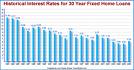
    Good news to all who are pondering whether now is the right time to get that home loan you have been thinking about for years. Home interest rates are at an all time low. And now you can pay your loan up to 25% years for as low fixed interest rate of 11.5%.

    Pag-ibig has already lowered their interest rate and their monthly amortizations to make it easier for every Filipino to own their own home. And you can shop housing rates in banks to see who will offer you the lowest interest and best deals.

    Some may wonder why home loan rates are dropping. It is because of low inflation and a strong peso. Predicted to break the 47 pesos to a dollar level within the year. Barring any incident that may arise in the May elections. Time deposit rates are at an all time low. 1 Million pesos will only get you about 3.5% to 4 % interest rate per anum because of low treasury bill rates. And it is also predicted that short term home rates, now at an average 9% interest rate in most banks for a one year loan will go down a little more.

    The property and construction sector is also experiencing a big boom due to home buying and building by our OFWS who are contributing greatly to our economy.

    Picture: www.ibnlive.com

  • Back To Home Page
  • Wednesday, November 29, 2006

    Home Construction Loan


    Home Construction Loan

    Do you have an idle land that just sits there that does not generate
    any income for you while you pay your property tax yearly? Or do you own
    a lot but dont have the funds to build your dream house.

    Wether you plan to develop your land by building houses to generate
    rental income or you feel you are ready now to own your own home, you
    could apply for a home construction loan.

    There is a boom in real estate these days due to the inflow of money
    from our OFW'S. Spending and loan on construction is up and is expected
    to rise even further.

    One bank that I find caters to our OFW'S very well is Philippine
    Savings Bank or simply PSbank.Their requirements for OFW'S who would like to apply are the Recent Certificate of Employment or Job Contract and Verifiable proof of
    remittance for OFWs whose employers do not have a Philippine counterpart. Visit
    their site www.psbank.com.ph for more details on their home construction loan.

    Having a home you can call yours is a Filipinos ultimate dream. But
    unless you work hard, save and sacrifice some 'luho' this dream will not
    become a reality. So save some money and loan the rest so you can save
    on rent.

    Picture: www.creativebusinessadventures.com

  • Back To Home Page
  • Wednesday, November 08, 2006

    Consolidation Loan


    Consolidation Loan

    Sometimes we may incur multiple kinds of loans due to daily expenditures or over the course of doing business. Loans from credit cards, homeowner loans, equity loans, business credit loans etc., Each one of them probably belongs a to different company with their own terms and rates. If this is the case, you're better off consolidating your loans.

    A consolidation loan is usually obtained for the purpose of reducing the amount of the payments of bills from multiple loans owed by consolidating the bills into one loan payment. The customer pays off several bills with the proceeds from one loan and is left with one consolidated monthly payment. A consolidated loan may offer a lower monthly payment but usually at a longer repayment period. Also called debt consolidation.

    Picture: www.arumtec.net

    Related Links:

    Loan Guarantees
    Getting a bank loan for your business
    Mortgage Refinancing
    Secured Loans
    Credit Cards
    Home Equity Credit Line LoanDebt Collection Agency
    Predatory lending
    Personal Bankruptcy
    Investment Fraud
    Debt Management guide

  • Back To Home Page