Showing posts with label Banking. Show all posts

Tuesday, December 16, 2008

Madoff Scam | Local Banks


With the bankruptcy of Lehman Brothers still affecting some of our local bank's balance sheets, here is something to watch out for. The former chairman of the Nasdaq stock market, Bernard Madoff has been arrested and charged with securities fraud for running a hedge fund business that bore his name which recently was revealed to be nothing more than an elaborate ponzi scheme started way back in 1960, constantly paying investors resulting in a staggering loss of 50 billion dollars thereby exacerbating the global economic crisis.

Already, major international banks and financial institutions like HSBC has admitted to having billions of dollars exposed in one of the biggest investment fraud in history and made millionaires who invested with them virtually penniless overnight. While is still remains to be seen if some of our local banks made any investments directly with Madoff, indirectly, they might be affected because of investments made to big international banks who are exposed and now a couple billion dollars short. While I doubt that this will have any significant effect on our banking sector as a whole, the BSP should also take further steps to strengthen our financial institutions. Better regulation will help ensure that our banks are in a healthy position to withstand the current worldwide financial storm and come out even stronger.

Monday, October 01, 2007

Banks | Partners In Franchise Business


Finding the right bank best suited for you is like getting married, either it is a match made in heaven or a match made in hell. The number of banks we have in our country that are competing for your business makes sure that we will never run out of choices. Choosing the right bank is important especially for businessmen who rely on banks for their daily transactions and should really consider banks as their partners in business rather than just a place to make payments, withdraw and deposit their funds. But what are the things we need to look for when choosing for the right bank? Here are the top three criteria I look for in choosing a bank for my franchise business.

1.) Accessibility and Geography - I consider this the most important criteria for me when choosing a bank. A bank can have the longest banking hours and the lowest maintaining balance or even the friendliest staff, but if they are located very far from where you live or do your business then especially if you have to go there everyday, all of the other criteria goes out the window.

2.) Banking Hours – Most of us has experienced needing to go to the bank for an important transaction only to arrive there 5 minutes late after the bank closed and the guards will not let you in, pretty frustrating isn't it? Most banks operate from 9 a.m to 3 p.m but some are open up to 7 in the evening. You should also take note on the cut off time for their check deposits. This varies not only from bank to bank but also from branch to branch. I may be a bit bias here but I found that Banco De Oro does a very good job keeping their bank hours longer and some of their branches are even open on Saturdays, particularly in malls.

3.) Maintaining Balance and Penalties- Depending on the size and scale of your franchise business operations, the amount of money you need to maintain an account without falling below the required maintaining balance is important. Depositors who fall below the minimum maintaining balance of their accounts are penalized between 100 to 200 pesos per month, That is more money than you will ever get from the interest of your savings account in a year. Some businessmen complain about the charges and claim they were never informed about them. But the banks terms and conditions in regards to penalties and other matters of concern are clearly indicated in the documents we are required to sign up upon opening of the account so we have no legal right to complain. Make it a habit to read all their terms and conditions prior to signing because once we sign, we are agreeing to their conditions. If you find their terms unacceptable then simply look for another bank whose conditions you are more comfortable with.

Saturday, May 26, 2007

Philippine Bank Consolidation


Bank mergers are over the horizon with the merging of two big commercial banks in the country, Banco de oro and Equitable PCI bank switched the other big banks namely Metro Bank and Bank of the Philippine Islands (BPI) into acquisition mode. Looking into smaller banks that they could acquire so they could match BDO-EPCI mega merger. Banks have the option to merge or consolidate with other banks especially since BSP is beefing up the capital requirement with the Basel 2 capital adequacy framework. Basel 2 is a revision of the existing framework which is referred to as Basel 1 which helped to strengthen the soundness and stability of the international banking system as a result of the higher capital ratios that it required. Basel 2 aims to make the framework more risk-sensitive and representative of modern banks' risk management by providing incentives for firms who improve upon their practices. The new framework aims to leave the overall level of capital held by banks collectively and broadly unchanged.

In the process of consolidating bank concentration is expected to increase. But will the consolidation of our banking industry be good for us consumers? When banks merge, their assets are pooled together so they become stronger financially overall, that makes it safer for us to bank with them and greatly reduces the risk of a bank run. And I believe they will be able to provide faster services as well as cheaper interbank fees particularly in the ATM which, I am sure all of us would agree that ATM fees are unreasonable to some extent with ridiculous fees in which some ATM fees whether you withdraw money or just inquire your balance is computed in dollars. But we loose diversity if the dust settles and only a few mega banks remain. But I got to admit that in my view, banks in the Philippines are already saturated with many banks offering basically the same products and services. the difference I believe is in service and this what banks use to win clients from each other. Banks that uses high interest rate to get customers are often not that financially stable or has plans to expand and needs capital. For such banks just make sure they are PDIC insured and your deposit with them is around at maximum of 250k per depositor name.

Thursday, April 26, 2007

ATM card


Having an ATM card is very convenient. You don't have to go to the bank just to stand in line to withdraw your money and you can withdraw anytime anywhere 24/7 as long as there is an operational ATM machine even during weekdays and holiday. Very useful in case of emergencies. Paying your bills? why stand in long lines again in banks or your local bayad center when you can pay using your ATM card. As long as you have sufficient funds, paying you bills has never been easier. It can even accommodate multiple bill payments since ATM machines now accepts your electric, phone, cable, cellphone, credit card bills and more.

But when withdrawing money from your ATM card be careful which ATM machine you withdraw from. The ATM machine located near your home might look convenient but you might just be surprised as to how much fees you are going to be charged just by withdrawing your money there. A lot of my friends are surprised when they inquired how much is their remaining balance only to find out that they have been charged anywhere from P7.50 to hundreds of pesos. You will be also charged just by inquiring your balance ranging from one peso to a dollar.

Banks have been more transparent of the fees their ATM machines charges in recent years but it definitely still needs improvements. Measures have been taken to make to make the list of charges more visible by placing them in plain sight near the ATM, but not all people pay attention to their surroundings. As much as possible, even if it is inconvenient, withdraw only from your banks ATM. Sometimes the fees maybe not be significant for you but if you withdraw frequently it does add up and you will be surprised as to how much the fees are eating up your money after a year.

Friday, March 16, 2007

Paying Your Bills Via Online Banking


Do you hate standing in long lines just to pay your utility bills? Not only are you wasting your time standing there when you can be doing something else more productive, but you will also be spending money. Think about it, whether you drive your own car or commute via public transportation to go to the bank, mall or bayad centers to pay your bills, you are spending money on gas and fares adding to the overall cost of your utility expense. Not to mention you have to make sure when you arrive there the payment centers are still open. What if you did not make it on time and today is the last day of your payment and the penalty for late payment is either a hefty fine specially for credit cards bills or a disconnection notice from your electric or water company. Don't you wish you can pay you bills at a click of a button with 24/7 access without the hassles of standing in line or commuting? The solution is online banking.

More and more banks here in the Philippines are now offering online banking features to their existing clients savings and current accounts. Banks like Psbank, Union bank and a whole lot of others are offering their clients access to their accounts via the web for various transactions like account inquiry, fund transfers and bills payment. Fund transfers are pretty useful if you are doing business with online companies, for example stock trading with CitisecOnline or Philstocks which you can opt to receive payments via online transfers instead of having to wait or going to them to receive your check, and even after receiving the check you will still need to wait three days for it to clear. This will save you time and money, plus you will immediately have access to your funds upon confirmation of the transfer. Since it is 24/7, you can even pay your bills at midnight! Although I must admit that this system is not perfect since not everyone has Internet access and if you have no money in your account you will still need to go to your bank to fund it. But I do believe that using online banking for paying you utility bills is a better option than actually going there physically to pay.

Friday, February 23, 2007

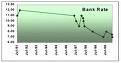
Declining interest rates changes bank strategy


Declining deposit and time deposit interest rates would force banks to change their business strategy, and will eventually force the industry to return to the basics of traditional banking. Banking industry leaders admitted that the industry has been spoiled by the largesse coming out of the government’s heavy borrowing in the last five years as enjoyed by their high interest rates offered to their clients.

This is the perfect time for banks to grow their traditional businesses, namely lending like personal loans, commercial loans, home loans, auto loans and deposits.
The industry is expecting a big squeeze in the government securities business as benchmark rates continued to slide to historical lows as evidence by the all time low t-bill rates, banks clearly have to adjust.

However the shifting conditions in the banking industry would create opportunities for banks present only in market with sufficient depth and liquidity. Traditional depositors and investors would want more sophisticated and varied ways to grow their money, they would likely go into pooled funds, UITFs or consider other financial services that banks could provide them.

Bank regulators are not expecting the low interest rates regime to be short-lived either. It is projected there will be a significant increase in bank lending especially since banks have very little else to do with their funds. Interest rates are merely responding to macro-economic factors that are not likely to change anytime soon, particularly the government’s declining need to borrow funds and the strong peso to dollar exchange rate that we are enjoying due to favorable market conditions and OFWs dollar remittances.

  • Back To Home Page
  • Monday, February 19, 2007

    Unified Financial Regulation For Philippine Financial Institutions


    The Bangko Sentral ng Pilipinas or BSP signified their intent on setting up an integrated regulatory body that will combine the functions of the BSP, Insurance Commission (IC) and Securities and Exchange Commission (SEC) which is now long due and caught some by surprise given the BSP's long-standing resistance to the very idea of such integration.

    This surprising change of heart may be indicative of the recognition of the growing complexity of the financial and loan markets plus the regulatory gaps that could occur and have in fact occurred as a result of such complexity.

    The financial services industry, composed of banks, non-banking financial institutions, loan companies and insurance companies, has been growing fairly rapidly in the past couple of years. It was the non-banks, which include investment houses, mutual fund companies, security dealers, brokers, loan agencies and pawnshops that zoomed ahead with a phenomenal growth.

    The healthy growth rate the industry currently enjoys attests to its recovery from the hiatus brought about by the Asian financial crisis almost 10 years ago.
    Along with this growth comes increasing complexity in the financial products the industry offers. Take for example an insurance policy now provides more than just insurance. Often, it is a savings investment, pension and loan product.

    The ups and downs of the pre-need industry have become well-known to us this couple of years with high profile cases where the pre-need firm was unable to meet its financial obligations to its insurance plan holders particularly the traditional educational plans. Banks and investment houses now offer a range of simple to extremely complex financial investment instruments beyond the usual loans, savings and time deposits, including the recently controversial and misunderstood UITFs, and various types of derivatives.

    It is often said that the financial services industry is capable of developing a product for every conceivable need or opportunity and make a lot of money in the process. But the big question is your money safe when you invest it in these financial products?

    Small savers or investors often do not understand the risks and returns that come with their various saving and investment options like mutual funds and UITFs.
    The issue is crucial, especially now as we seek to channel more of the billions of dollars in overseas Filipino workers (OFW) remittances toward investments, and failures of financial institutions could destroy the lives of millions overnight.

    This is where the role of the financial regulators in protecting the welfare of the investing public is critical. In the Philippines, we have several of them, each addressing a different segment of the financial services industry. The main ones are BSP for the banks, IC for insurance companies, SEC for corporations, and the Cooperatives Development Authority (CDA) for cooperatives.

    The challenge lies in the way the lines distinguishing these various segments from one another are quickly vanishing. Under this situation and given the ever-widening array of complex financial products coming out of the industry practically every day, ambiguities have arisen as to which regulatory body should take care of new products as they come out.

  • Back To Home Page
  • Thursday, February 08, 2007

    More Banks To Sell Off Non Performing Loans


    More and more banks and other financial loan institutions are seeking approvals from the Bangko Sentral ng Pilipinas to sell off at a discount, their non performing loans (NPLs) whose assets include vacant lots, house and lots, town houses, condominiums and other assets that banks are unable to sell off which are acquired when clients are unable to pay off their debts like housing loans, home equity loans, home construction loan and are unable to refinance it via another loan, are to avail of the tax privileges and other perks under the sunset provisions of the Special Purpose Vehicle (SPV) Law.

    In the coming months, it is expected more transactions will be completed as an estimated P51 billion of applications are in the pipeline. Market sources intimated that included in the P51 billion up for grabs are Land Bank of the Philippines loans that have turned sour amounting to P3.5 billion worth of bad loans.

    Cleaning the balance sheet of bank and financial institutions peppered with non performing loans in recent years is one of the major thrusts of the BSP in the medium-term with the end in view of strengthening the local banking system as well as financial loan institutions. The banking system will have a superior asset quality and will have much enhanced service to the general public with the unloading of these non performing loans that has dragged the ability of the financial loan institutions to loan actively to more productive business endeavors.

    With the deceleration in the levels non performing loans, banks will be able better meet the demands of their clients and be more competitive in the world market as well as helping the economy by unloading non performing loans.

  • Back To Home Page